On August 10, BYD announced via its official WeChat account for investor relations that on August 8 it signed a cooperation agreement with Thai NEV dealer RÊVER Automotive, officially entering Thailand's passenger car market.

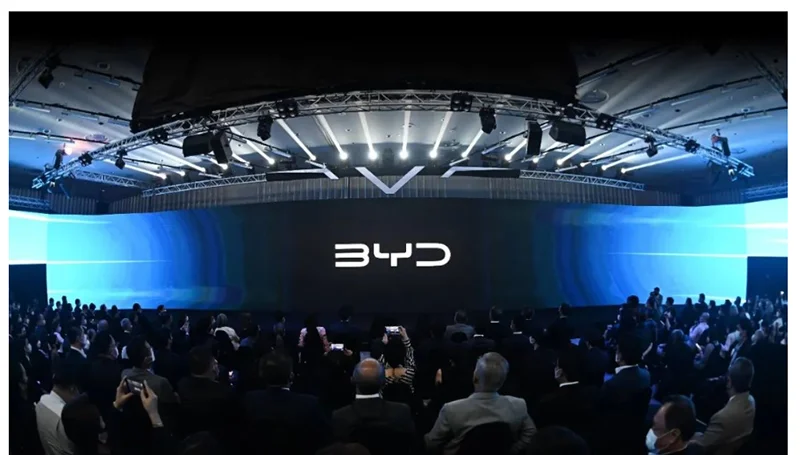
Reporters from Shanghai Securities News noted that BYD has also announced entry into markets such as Germany, Sweden, Norway, and Japan.
'We will increase efforts to expand overseas markets in the future,' BYD Chairman Wang Chuanfu previously stated, adding that the company faces significant pressure in overseas market development but is still allocating scarce resources to promote the global EV market.
Accelerating 'Going Global'
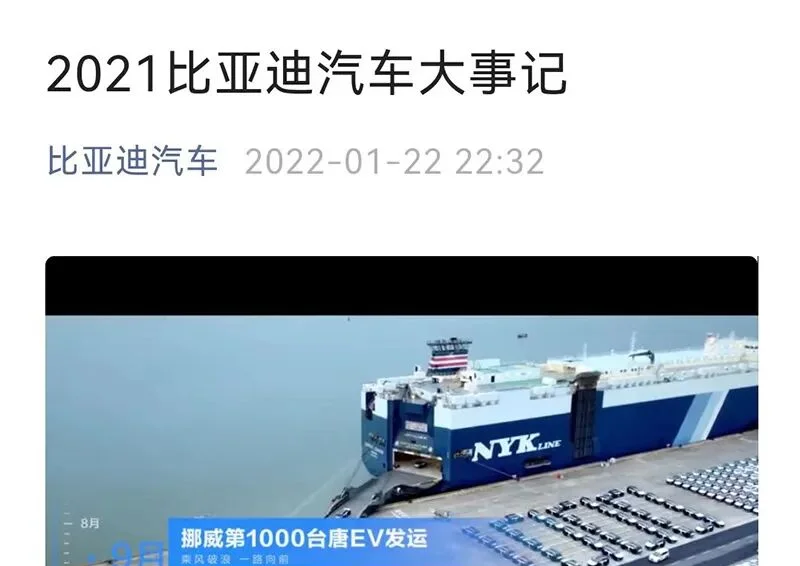
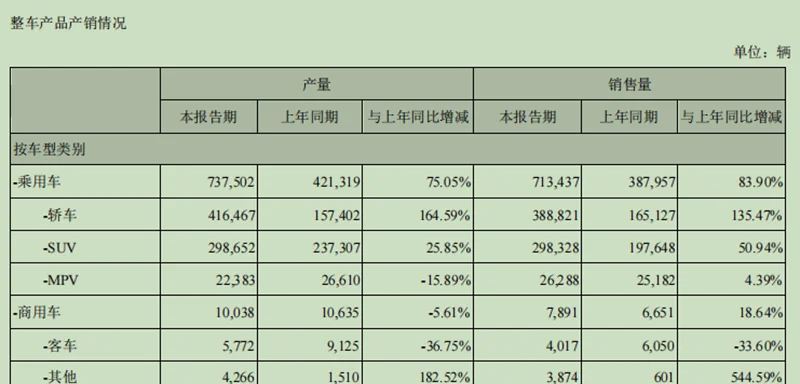
BYD recently disclosed July production and sales data, showing overseas sales of 4,026 NEV passenger cars in that month. This is the first time BYD has disclosed monthly overseas sales data.
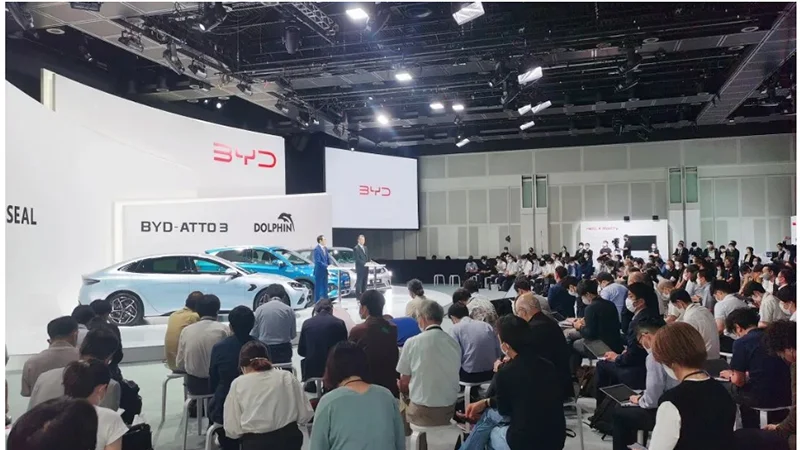
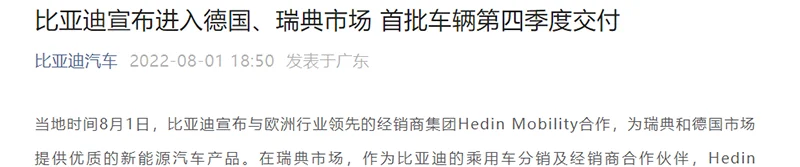
Since 2021, BYD has been actively expanding its overseas passenger car market. In 2021, it first entered Norway, delivering 1,000 NEVs. On July 21, 2022, BYD announced entry into Japan's passenger car market, unveiling models including Yuan PLUS, Dolphin, and Seal in Tokyo, with sales expected in 2023. On August 1, 2022, BYD announced cooperation with European dealer group Hedin Mobility to provide NEVs in Sweden and Germany, and will participate in the Paris Motor Show in October 2022, with first deliveries expected in Q4 2022. On August 8, 2022, BYD signed an agreement with RÊVER Automotive to enter Thailand's passenger car market, and plans to attend the 39th Thailand International Motor Expo.
BYD previously deployed its first batch of pure electric taxis in Thailand in 2018. Ke Yubin, General Manager of BYD Thailand, noted that BYD's business in Thailand now covers electric forklifts, electric buses, and more.
Incentivizing 'Going Global'
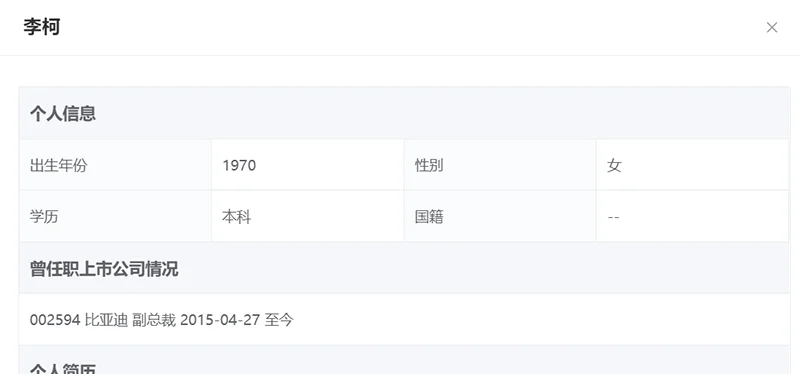
Notably, BYD executive Li Ke, who recently gained attention for donating some BYD shares, has played a significant role in BYD's overseas business. Li Ke has been involved in BYD's North American electric bus and battery businesses. In 1999, she incorporated a company in Chicago and later established BYD's North American headquarters in Los Angeles in 2010. In 2013, BYD built an electric bus and battery factory in Lancaster, which is currently the largest pure electric bus factory in North America.


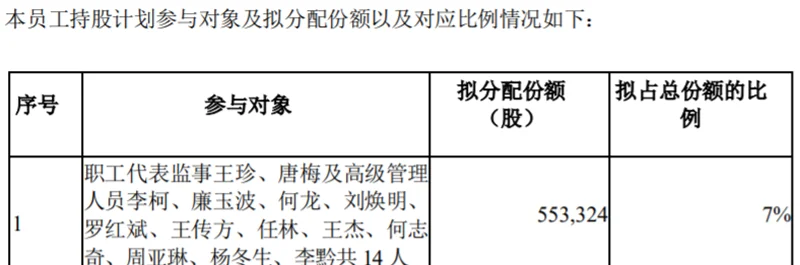
To accelerate its overseas expansion strategy, BYD has implemented a zero-cost employee stock ownership plan as an incentive. The plan covers 14 executives including Li Ke, Lian Yubo, and He Long, as well as up to 11,986 other employees, with a transfer price of 0 yuan per share. BYD has allocated 1.8-1.85 billion yuan to repurchase shares for the plan.
Closing the Gap
BYD's overseas expansion faces challenges, including rising raw material costs and strong domestic demand causing order backlogs. Domestic NEV market penetration is rising rapidly; Wang Chuanfu predicted an 35% penetration rate by end of 2022. However, internationalization is crucial for BYD to become a global giant. Zhang Xiang, Dean of the New Energy Vehicle Technology Research Institute at Jiangxi New Energy Technology Vocational College, noted that while BYD has grown quickly, it still lags behind giants like Volkswagen and Toyota. BYD's advantages in cost and technology in NEVs, coupled with generous subsidies in the US and Europe, present opportunities. BYD's core technologies include blade batteries, DM-i super hybrid, and e-platform 3.0, offering both EV and plug-in hybrid options. Although BYD outsold Tesla in NEVs in H1 2022, Tesla leads in internationalization.

BYD's acceleration reflects Chinese automakers' faster 'going global' pace. China's NEV exports reached 202,000 units in H1 2022, up 130% year-on-year, accounting for 16.6% of total vehicle exports.