✎ Editor's Note

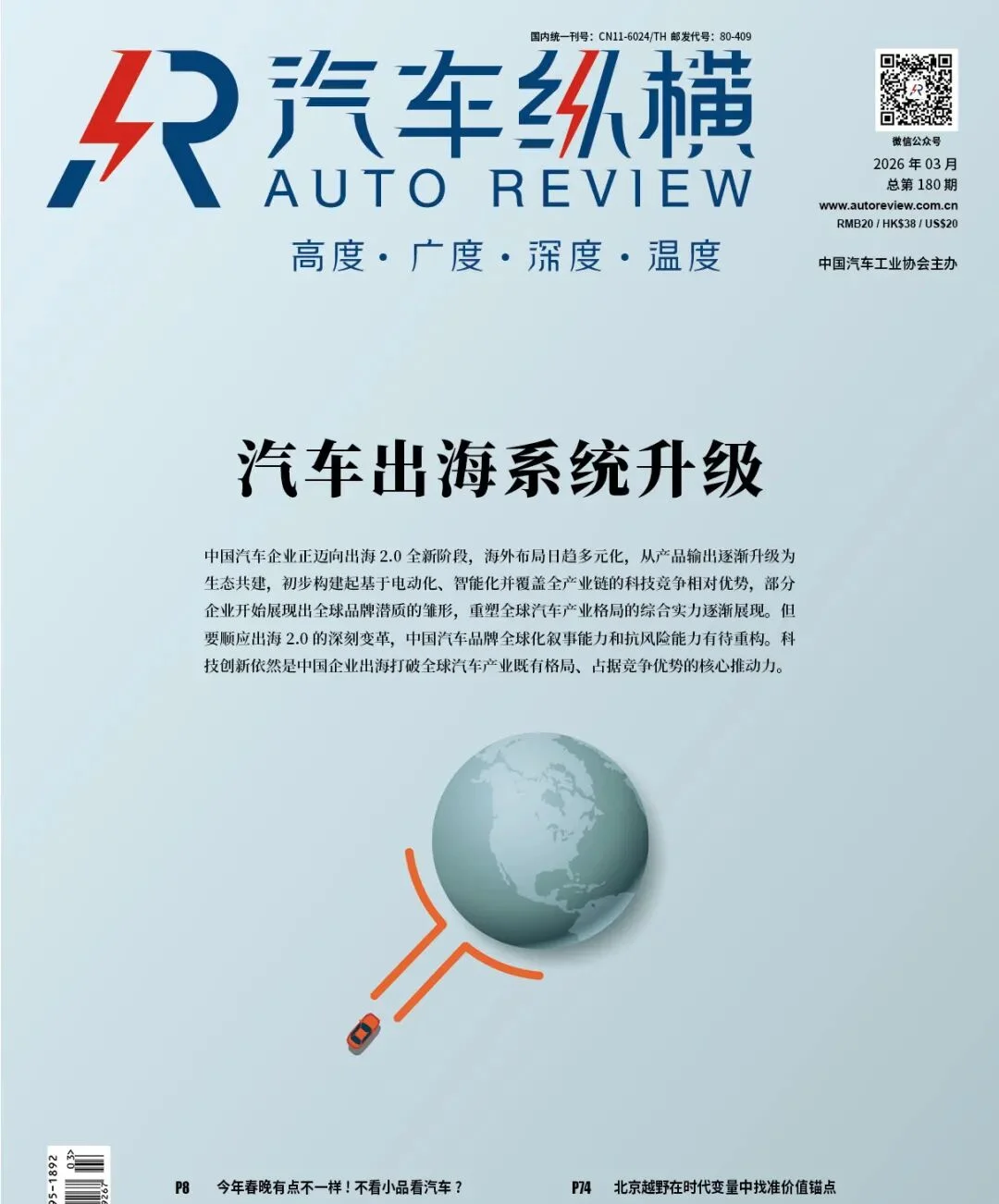
Chinese automakers are entering a new phase of overseas expansion (Going Global 2.0), shifting from product exports to ecosystem building. Leveraging advantages in electrification, intelligence, and the entire supply chain, some companies are emerging as global brands, reshaping the global automotive landscape. However, to adapt to this transformation, Chinese auto brands need to strengthen their global narrative and risk-resilience capabilities. Technological innovation remains the core driver for breaking the established global automotive structure and gaining a competitive edge. Auto Horizon presents this special cover story on automotive exports, comprising seven articles. This is the fourth article.
From a "newcomer in overseas markets" to a "global leader in new energy vehicles," BYD has completed a remarkable turnaround in just five years, writing a legendary chapter in Chinese automakers' global journey.
Over the past five years, BYD has set a blistering pace, marking a significant chapter in the globalization of China's auto industry. In 2025, its overseas passenger vehicle and pickup sales exceeded 1.0496 million units, surging 145% year-on-year. Overseas sales have multiplied nearly 21 times in five years — from initial product exports to nine overseas factories, from dominating Southeast Asia to overtaking traditional European auto powerhouses. BYD has transformed from a "newcomer" to a "global leader" in new energy vehicles, systematically executing a global strategy.
At the 2023 ceremony for its 5 millionth new energy vehicle, BYD Chairman Wang Chuanfu stated clearly: "BYD's global expansion is not simple product export, but the export of the entire industrial chain, technology, and brand. We aim to root Chinese intelligent manufacturing globally and let new energy vehicles change the world's mobility." Today, with technology at its core, the industrial chain as its shield, and localization as its sword, BYD is cutting through the blue ocean of the global auto market, rewriting the competitive landscape and setting a benchmark for Chinese automakers' industrial export.
Five-Year Breakthrough: BYD's Hardcore Overseas Report Card
In five years, BYD's overseas journey has achieved a leap from "quantitative accumulation" to "qualitative transformation," delivering an impeccable record in sales, markets, industry, and brand.
In 2021, BYD's overseas sales were only 50,000 units. Five years later, that figure soared to 1.0496 million in 2025, with a monthly peak of 131,600 units — a brand record. Key milestones: 242,800 units in 2023 (up 334% YoY), 417,200 units in 2024 (up 72% YoY). By end of 2025, overseas sales accounted for 22.8% of BYD's total — one in four BYD cars sold abroad, making overseas markets a core growth engine.
BYD's footprints now span 119 countries and regions, forming a pattern of three core markets — Europe, Southeast Asia, and Latin America — with coordinated growth in the Middle East, Central Asia, and Africa.
In Europe, BYD broke the monopoly of traditional automakers. In 2025, European sales reached 187,700 units, up 268.6% YoY; Germany sold 23,300 units (up over 700%), UK 51,400 (up 576.9%). The Seal U model topped the European plug-in hybrid market with 72,700 units sold in 2025.
Southeast Asia remains BYD's stronghold: the ATTO 3 was Thailand's best-selling pure EV for 18 consecutive months; the Indonesian plant delivered over 10,000 units in its first month; the Thai plant has an annual capacity of 150,000 units with 70% localization rate, efficiently serving ASEAN countries.
In Latin America, BYD dominates Brazil's pure EV market with a 92.16% share, and its hybrid models hold 35.8%. The Brazilian government even approved a "BYD Avenue." The Han EV is the designated vehicle for Mexico's Federal Police. The Yangwang U8 has become popular among Middle Eastern elites. The Uzbekistan plant supplies Central Asia and Russia. BYD's global layout is comprehensive, with every step precisely seizing market opportunities.
More importantly, BYD's overseas model is rapidly shifting from "product export" to "industrial export." It has completed or is building nine overseas factories, gradually establishing localized production networks:
- Jizzakh Plant, Uzbekistan (June 2024): first overseas joint venture NEV factory, serving Central Asia.
- Rayong Plant, Thailand (July 2024): serves ASEAN and exports to Europe.
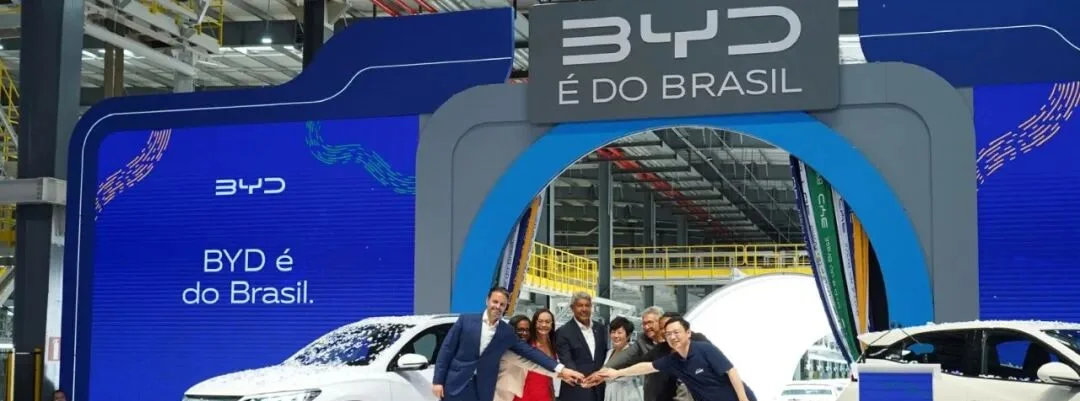
- Camacari Plant, Brazil (gradually operational from July 2025): full operations by end 2026, capacity up to 300,000 units, largest EV manufacturing center in Latin America.
- Szeged Plant, Hungary (€4 billion investment): trial production in Jan 2026, mass production expected Q2 2026, initial capacity 150,000 units, hub for European market.
- Subang Plant, Indonesia (90% construction progress, expected Q1 2026 production): focuses on local market.
These factories are phased and orderly, enabling "produce locally, deliver locally," significantly reducing logistics costs and tariff barriers.
Notably, BYD has achieved a dual breakthrough in brand premium and technological influence overseas. Premium brands like Denza and Yangwang have successfully entered Europe and the Middle East. The Yangwang U8's desert floating mode has made it a favorite among Middle Eastern billionaires. Technologically, BYD licensed its e-platform 3.0 to Toyota and transferred blade battery technology to Hyundai — the first time Chinese automakers have provided technology backflow to global mainstream automakers. Its EV charging standard has been adopted by seven ASEAN countries, positioning BYD as a global standard setter.
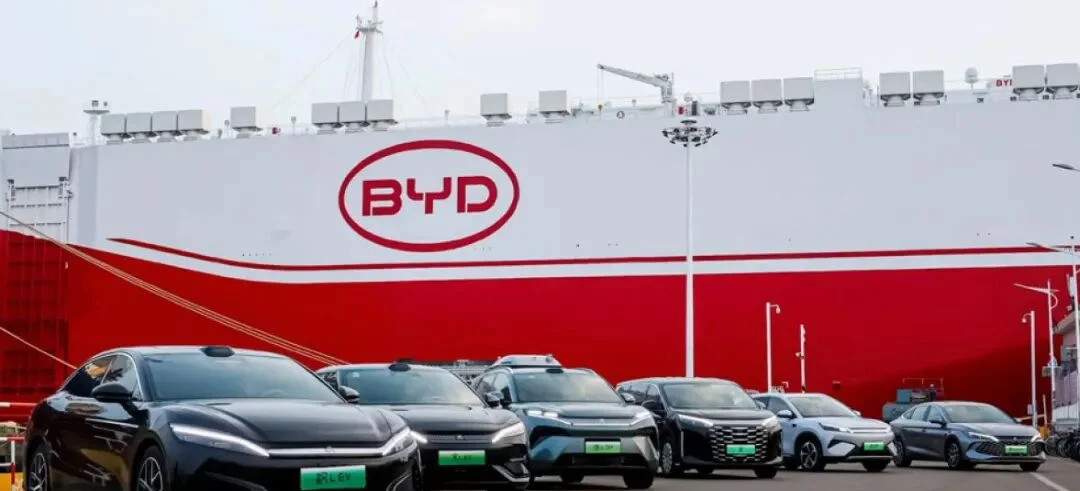
Additionally, BYD has built an ocean fleet of eight roll-on/roll-off ships, with annual capacity exceeding one million vehicles, cutting logistics costs by 40%. A partnership with Shell to build 120 ultra-fast charging stations will cover major EU highways. The integrated "vehicle-charger-storage" ecosystem further strengthens brand competitiveness.
Full-Stack Self-Development: The Irreplaceable Foundation
Technology is BYD's core strength. Full-stack self-developed batteries, powertrains, and intelligent systems make BYD irreplaceable globally.
Over five years, BYD invested over RMB 220 billion in R&D. In the first three quarters of 2025, R&D spending reached RMB 43.75 billion, up 31% YoY. This has built a "technology reservoir" with three core technological barriers:
- Blade Battery: Structure innovation ensures no open flames under extreme conditions, passing strict tests worldwide. In safety-conscious Europe, this is a key advantage; in emerging markets, its long life and low cost perfectly suit local needs.
- Dual Powertrain Strategy: DM-i plug-in hybrid and pure electric platforms cover global markets. DM-i solves insufficient charging infrastructure in emerging markets with low fuel consumption (3.8L/100km) and over 1,200 km range. Pure electric platform supports high-end models like Seal and Han EV competing with Tesla and Volkswagen in Europe. Megawatt flash charging achieves "5 minutes charge for 400 km range."
- Intelligent Systems: DiPilot smart driving system adapts to global traffic rules and passes EU certification. DiLink infotainment system supports multiple languages and local apps. Self-developed automotive-grade chips ensure supply chain stability.
Long-term R&D investment creates a virtuous cycle of "R&D-application-iteration," enabling rapid response to global market demands.
Independent and Controllable: Cost and Resilience Advantages
"Full industrial chain self-control gives us initiative in global competition. No one can block us, so we can calmly face various risks and steadily advance globalization," said Wang Chuanfu at the 2024 Global NEV Conference.
BYD's vertically integrated system covers upstream raw materials to downstream services, creating advantages in cost, efficiency, and resilience:
- Upstream: Investments in nickel mines in Indonesia and lithium mines in Brazil ensure stable core material supply, mitigating price fluctuations and reducing transport/tariff costs.
- Core Components: In-house production of battery, motor, and electronic control systems costs 30% less than European peers. Self-developed chips avoid reliance on overseas suppliers, allowing rapid parameter adjustments per market needs (e.g., energy density for Europe, durability for Southeast Asia).
- Vehicle Manufacturing: Flexible layout with domestic bases for basic supply and nine overseas factories for local production. The Hungary plant will avoid EU tariffs further reducing costs.
- Downstream Services: Self-owned roll-on/roll-off fleet cuts European delivery time from months to weeks, significantly lowering logistics costs. Collaboration with Shell builds charging network. Over a thousand after-sales service points globally ensure localized support.
Being a "Local Citizen": Solving Localization Challenges
Overseas expansion is not about selling Chinese cars globally, but building suitable vehicles for global markets. Localization is a must-answer question, not an option. Only by truly integrating into local societies can long-term development be achieved.
BYD's localization spans four dimensions: product, talent, culture, and compliance.
- Product Customization: In Europe, optimized chassis tuning for unlimited-speed highways, multi-language support, local app integration. In Southeast Asia, enhanced vehicle passability for complex roads, prioritized DM-i models. In Brazil, custom hybrid system for ethanol fuel.
- Local Talent: Over 80% local employees at overseas factories (92% in Thailand). Training centers provide technical training and career paths. Local management and market experts participate in decision-making.
- Cultural Integration and CSR: Sponsoring sports events in Europe, festival marketing in Southeast Asia, adapting product design in the Middle East. Donating charging facilities, building schools, supporting environmental projects — transitioning from "outsider" to "responsible local citizen."
- Compliance: Strictly adhering to local laws on environment, labor, data security. In North America, using Mexico plant to bypass trade barriers. Collaborating with local governments and industry associations to clear policy obstacles.
Long-Term Strategic Focus

Wang Chuanfu has repeatedly emphasized: BYD's overseas expansion is never blind; it is precise. The "speed surge" is not rushing but steady advancement. Globalization pursues quality over speed, long-term win-win over short-term gains. BYD aims to be a long-termist, doing each market well, deeply, thoroughly.

The strategy can be summarized as "step by step, key breakthroughs, comprehensive layout."
- Market Sequence: Priorities emerging markets with low NEV penetration and favorable policies (Southeast Asia, Latin America) to accumulate experience and brand influence, then gradually enter mature markets (Europe, North America).
- Product Sequence: Start with commercial vehicles (electric buses broke into strict markets like Japan and Europe), then passenger vehicles, achieving dual-wheel drive.
- Industry Sequence: From product export to CKD assembly to full industrial chain factories, progressively realizing "capacity, technology, and ecosystem export" for long-term stable development.
- Risk Management: Proactive anticipation and response, such as decisively laying out factories in response to EU anti-subsidy tariffs.