BYD's first wholly-owned overseas passenger car plant has officially landed in Thailand. On September 8, BYD Auto (Thailand) Co., Ltd. signed a land purchase and factory construction agreement with WHA Corporation Public Company Limited, marking a significant step in BYD's overseas business development.

In the new energy vehicle sector, Chinese automakers previously focused mainly on end sales when going overseas. Now, companies like BYD are gradually shifting toward the full supply chain of new energy vehicles.

"Chinese automakers are 'overtaking' onto the world stage through new energy vehicles. Besides BYD, other automakers will follow suit," said Zhang Xiang, dean of the New Energy Vehicle Technology Research Institute at Jiangxi New Energy Technology Vocational College. He believes BYD building its first overseas passenger car plant in Thailand is normal and necessary, helping it grow stronger internationally.
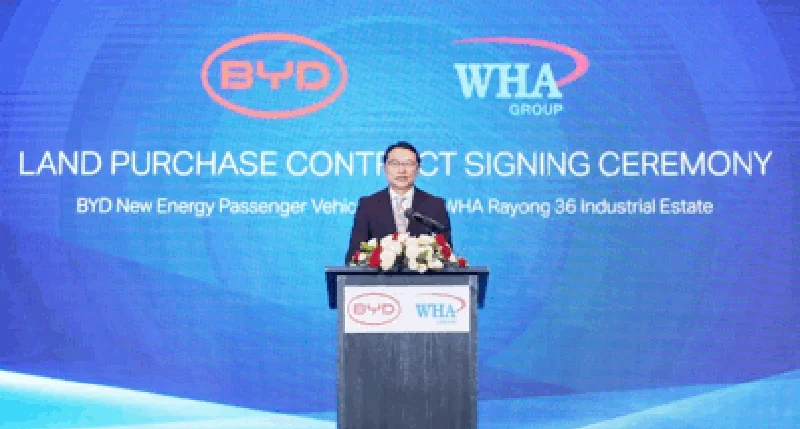
First wholly-owned overseas passenger car plant
Liu Xueliang, general manager of BYD's Asia Pacific auto sales division, said the company chose Thailand because of its strong automotive industry heritage and first-class manufacturing capabilities. Thailand is the largest auto market in ASEAN and Southeast Asia's auto manufacturing center. Driven by policies such as developing charging infrastructure, building smart grids, and tax cuts for new energy vehicles, Thailand's NEV market has grown rapidly, forming a strong market pull.

Currently, nearly 30 global automakers have entered the Thai market, employing about 100,000 people. The Thai government plans that by 2030, electric vehicle production will account for 30% of total auto output, making Thailand a potential major NEV market hub in Southeast Asia.
BYD said that with the establishment of its first overseas passenger car plant, it will fully leverage its entire industry chain and core technology advantages, combined with Thailand's local auto industry and cluster effects, to actively promote the popularization of new energy vehicles. BYD's overseas strategy includes deep localization. The Thailand plant will use the most advanced right-hand drive technology, is expected to start operations in 2024 with an annual capacity of about 150,000 vehicles, serving the local market and radiating to neighboring ASEAN countries and other regions.

Jareeporn Jarukornsakul, chairman and CEO of WHA Corporation, welcomed BYD to set up a production base in WHA's industrial park, expanding overseas business and working together to make Thailand a Southeast Asian EV center.
Sales network basically established
Previously, many domestic NEV companies going overseas focused mainly on sales. BYD has entered passenger car markets in Thailand, Germany, Sweden, Norway, Japan, etc., cooperating with strong local dealers to provide NEV products. On August 8, BYD signed a cooperation agreement with Thai NEV dealer RêVER Automotive, officially entering Thailand's passenger car market and planning to participate in the 39th Thailand International Motor Expo to showcase more models.
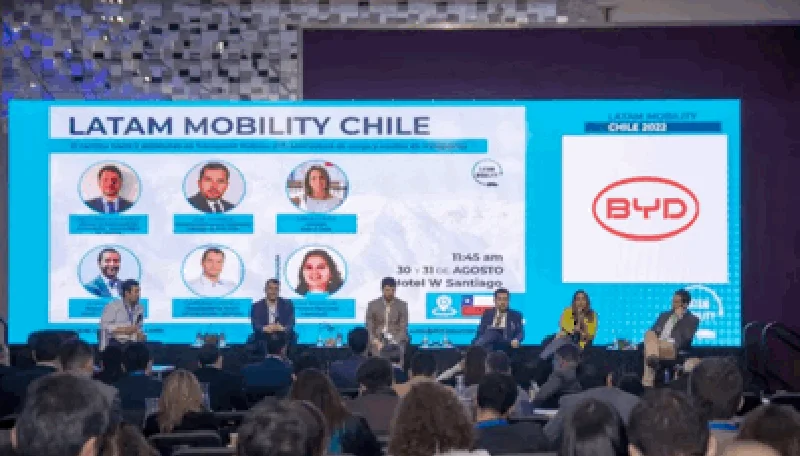
As early as 2018, BYD deployed its first batch of pure electric taxis in Thailand. Ke Yubin, general manager of BYD's Thailand branch, said that after years of cultivation, BYD's business in Thailand covers electric forklifts, electric buses and other fields. BYD's global sales network for passenger cars is basically established. On August 30, the 2022 Latin America Transport Summit was held in Chile. José Miranda, BYD Chile's communication and marketing manager, said that since 2015, Chile has introduced a large number of BYD electric vehicles, including the first pure electric bus fleet consisting of K9 buses and a pure electric taxi fleet of BYD e5s. BYD said its pure electric vehicles have been deployed in many Latin American countries, including Chile, Colombia, Argentina, Brazil, and Mexico.


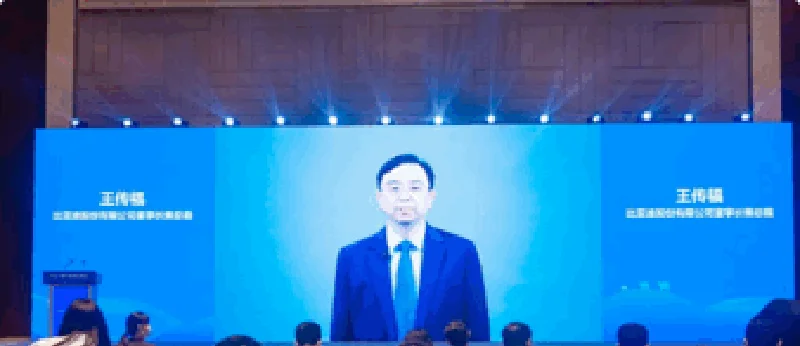
On August 9, BYD Chairman Wang Chuanfu said that BYD's NEV operations have spread to more than 70 countries and regions and over 400 cities, with cumulative deliveries exceeding 2.2 million units. In its July production and sales bulletin, BYD disclosed for the first time overseas sales of 4,026 NEVs. On the evening of September 2, BYD released its August production and sales bulletin showing overseas sales of 5,092 NEVs, up 26.48% from July.
NEV industry chain going overseas
"We will increase efforts in expanding overseas markets in the future," Wang Chuanfu previously said, adding that the company faces pressure but is allocating scarce resources to promote the global EV market. Looking back at Wang's remarks, BYD's overseas layout is an overall arrangement for the NEV industry chain. Building the first overseas passenger car plant in Thailand means BYD is shifting from geographic expansion to deepening the industry chain.
Overseas plant construction has become a new model for Chinese auto companies going global. Besides BYD, automakers like Changan Automobile, Geely Auto, and XPeng Motors have started global layouts by building plants and R&D centers overseas. Industry insiders believe that the globalization process of China's auto industry is opening a new chapter, evolving from simple export trade to a 'local adaptation' model of building plants, procuring local parts, and selling locally.

Zhang Xiang believes that Chinese automakers have certain advantages in the NEV field. NEV companies represented by BYD, with their leading edge, are going abroad, not only with technological advantages but also able to seize the first-mover opportunity. BYD has repeatedly stated that it is a company mastering core EV technologies such as batteries, motors, and electronic controls, providing one-stop new energy overall solutions. BYD's international business has expanded from early single batteries to solar energy, energy storage stations, NEVs, and rail transit, a set of green solutions connecting the entire industry chain from energy acquisition, storage to application, providing effective solutions for global cities to tackle air pollution and traffic congestion.